FloorRiser Active
FloorRiser Active
FloorRiser Active
FloorRiser Active

FloorRiser Active

One Device. One Person. No Manual Lift. No Ambulance Call.
$2,199.00 $2,599.00 $400 OFF -15%

FloorRiser Active eliminates manual floor-to-stand lifting in care facilities. One staff member handles the full assist safely in under 60 seconds — no back strain, no second person, no EMS call needed. Built for Illinois facilities managing HB 2336 compliance and staff injury costs.

2 year warranty
No assembly required
Shipped within 21 business days
60 days return

For Illinois Care Facilities

Two Problems. One Device.

Illinois care facilities are facing compounding liability from two directions. FloorRiser Active addresses both with a single $2,199 device.

The Compliance Problem

Illinois HB 2336 Is Now Law

  • Illinois HB 2336 (Public Act 104-0057, effective January 1, 2026) allows municipalities to bill facilities for EMS lift-assist calls above 6 per calendar year — up to $1,000 per call.

  • The average skilled nursing facility generates 21–32 lift-assist calls per year. After the first 6, every call is billable.

  • Estimated annual fine exposure: $7,500–$26,000 per facility per year.

    Based on CDC fall rate data and Decatur, IL ordinance implementation

The Staff Problem

Manual Lifting Is the Leading Cause of Nurse Injury

  • Manual lifting is responsible for 60% of back injuries among nurses.

    American Nurse Journal / Bureau of Labor Statistics
  • Only 39% of nurses feel they have adequate lifting equipment at their facility.

    PMC survey of 435 registered nurses, Michigan
  • Replacing one nurse costs an average of $61,110.

    2025 NSI National Health Care Retention and RN Staffing Report
  • Body mechanics training does not reduce injury rates. The biomechanical stress of lifting a person exceeds safe limits regardless of technique.

    Multiple peer-reviewed studies on safe patient handling

FloorRiser Active is as easy as 1-2-3

Position your FloorRiser
1.

Position your FloorRiser

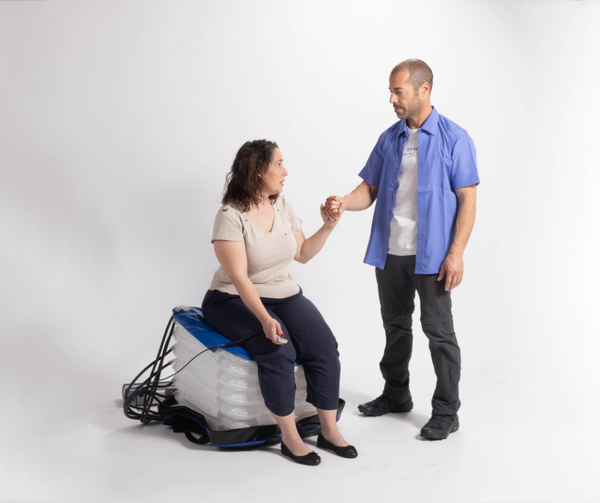
One staff member positions FloorRiser next to the resident — even in tight spaces like bathrooms or hallways

Lift & Stand Up Safely
2.

Lift & Stand Up Safely

Press up. The resident rises from floor level to standing height at their own pace — no manual lifting required from staff

Fold
3.

Fold

Deflate, fold, return to storage. Ready for the next call

What's in the box

FloorRiser Active

Portable floor lift that raises you up to 29 inches.

Main product image

Battery

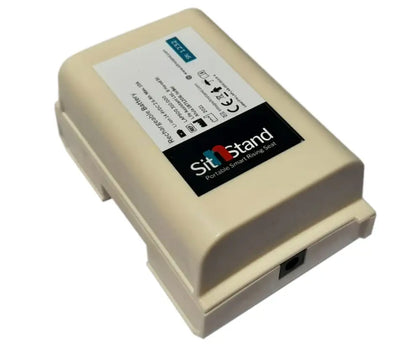
2 Rechargeable Li-Ion batteries pack that powers the FloorRiser for up to 4 uses per charge.

Battery

Charger

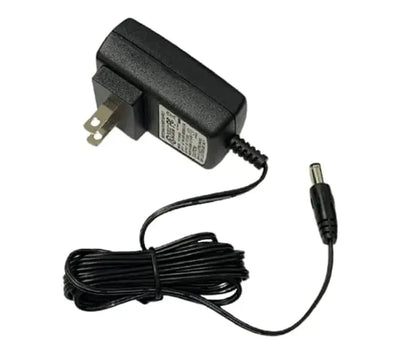
Universal wall adapter with cable to recharge the battery pack (100-240V compatible).

Charger

Why You'll Never Want to Be Without It

Consider the FloorRiser Active as your personal, mobile lifting platform for fall recovery. While alternative options resemble a basic stepping block or an inflexible, occasionally unstable climbing aid, the FloorRiser Active delivers a gradual, secure rise, restoring confidence and protection to individuals requiring help transitioning from ground level. Packaged in a convenient backpack for instant deployment, it transforms any location into a safe recovery zone.

+
Maximum Lift Power

Maximum Lift Power

600 lbs + 29 inches - Unmatched in the industry. Handles bariatric residents that require two-person manual assists today

+

Handles what others can't: 600 pounds lifted to 29 inches. While competitors max out at 22 inches and lower weight limits, ours gets anyone to proper standing height. No awkward final push - just smooth, controlled lifting to exactly where you need to be.

+
Lightweight Portability

Lightweight Portability

17 lbs + backpack = effortless mobility Moves between rooms and floors without a second trip

+

At just 17 lbs, the FloorRiser Active travels effortlessly in its backpack. Competitors weigh 48 lbs and require awkward carrying. Simply sling yours over your shoulder and move from room to room like a hiking pack - no lifting, no strain, no help needed.

+
Zero Setup Required

Zero Setup Required

No assembly, no installation. No training program. No policy change. Active on your floor within days of delivery

+

Open the suitcase and roll it under - ready to lift instantly. No assembly, no complex setup that burdens caregivers. While competitors require careful positioning of inflatable systems, our device works in seconds when every moment counts.

+
Ultra-Simple Operation

Ultra-Simple Operation

Two buttons is all you need - up or down. Any staff member can operate it on night shift without instructions

+

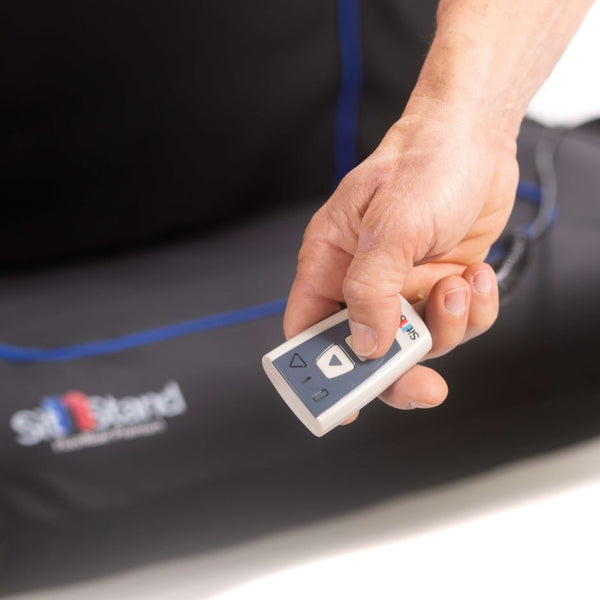
Two buttons control everything: up and down. No confusing controls or multiple settings - even in an emergency, anyone can operate it instantly. While other devices have complex controls, ours works intuitively when stress levels are high and quick action matters most.

+
Rock-Solid Stability

Rock-Solid Stability

Extremely stable lift with no one standing behind your back

+

Your caregiver simply helps position the device, then you're lifted safely without them straining to hold you up. The stable platform does all the work while other devices require continuous physical support, putting caregivers at risk of injury during the lifting process.

The Numbers

The Cost of Inaction vs. FloorRiser Active

At $2,199 with a 3-month payback, the math on waiting doesn't work in your favor.

Annual cost comparison for Illinois skilled nursing facilities — cost of inaction vs FloorRiser Active investment at $2,199
Scenario Annual cost without FloorRiser
HB 2336 fines (avg facility, $500/call) $7,500–$13,000
One lift-related workers' comp claim $30,000–$50,000
One nurse replaced due to injury $61,110
FloorRiser Active — payback under 3 months $2,199

HB 2336 fine estimates based on Decatur, IL implementation ($500/call) and CDC fall rate benchmarks. Workers' comp and turnover figures from NIOSH and NSI 2025 report. Verify local ordinance status before projecting fine exposure.

Frequently Asked Questions

Everything Facilities Need to Know

Questions from Directors of Nursing, Administrators, and facility leadership about FloorRiser Active and HB 2336.

HB 2336 & Compliance

Illinois Public Act 104-0057, effective January 1, 2026, allows municipalities and fire departments to bill licensed care facilities for non-emergency EMS lift-assist calls that exceed 6 per calendar year. The fee can be set up to the actual cost of the response — in Decatur, IL this has been set at $500 per call. Each municipality must pass a local ordinance to begin billing. Not all Illinois cities have done so yet. Verify your local status directly with your city or fire department.

Contact your local fire department or city clerk directly. As of June 2026, Decatur has implemented at $500 per call and Springfield is in active review. Most other Illinois municipalities are monitoring outcomes before moving forward. The law is enabling — your facility has no fine exposure until your municipality passes a local ordinance.

HB 2336 fines apply specifically to calls where EMS is dispatched for a non-emergency lift-assist. FloorRiser Active enables one staff member to handle a floor-to-stand assist without calling EMS — eliminating the billable call entirely. How much it reduces your call volume depends on your current ratio of emergency vs. non-emergency incidents.

FloorRiser Active handles non-emergency floor-to-stand situations — residents found on the floor who are alert, uninjured, and do not require medical attention. It does not replace EMS for emergencies where a resident is injured, unresponsive, or requires medical evaluation. Your actual reduction in billable calls depends on the proportion of your calls that are non-emergency lifts.

Staff Safety & Operations

Manual lifting is responsible for 60% of back injuries among nurses. FloorRiser Active eliminates the manual lift entirely — the device does the lifting while the staff member operates a two-button remote. No two-person assist required. No physical strain on the operator. The staff member positions the device and guides the resident; the inflation system does the work.

Research consistently shows that body mechanics training does not reduce manual lift injury rates. The reason: the biomechanical stress of lifting a person off the floor exceeds safe limits regardless of technique. NIOSH sets 35 lbs as the maximum safe single-person lift — most residents weigh significantly more. Training teaches staff how to lift correctly, but correct technique still places dangerous loads on the spine. Only removing the lift itself removes the injury risk.

Night shift is exactly where FloorRiser Active has the most impact. Most falls occur at night, and staffing is thinnest. FloorRiser Active allows a single nurse to handle a floor-to-stand assist safely without calling for backup, without waking a second aide, and without waiting for EMS. One person, under 60 seconds, no second pair of hands required.

Yes. When deflated, FloorRiser Active is 29" x 29" x 0.4" — it slides flat under a resident on the floor. When inflated it expands to 29" x 29" x 29". It works in most standard bathroom layouts, hallways, and bedrooms. The flexible inflatable cushion adapts to the available space around the resident.

Product & Specifications

600 lbs (272 kg), making it suitable for bariatric residents who typically require two-person manual assists. This is among the highest weight capacities available in portable floor-lift devices.

Up to 4 lifts per charge. The battery retains charge for up to 6 months when disconnected. Each unit ships with 2 rechargeable Li-Ion battery packs so one can charge while the other is in use.

Under 60 seconds from unfolding to positioned and ready. The device unfolds from a 17 lb carry bag, slides flat under the resident, and is controlled via a two-button remote (up/down). No assembly, no tools, no installation.

Ceiling lifts and Hoyer lifts require installation, room-specific hardware, and typically a two-person operation. FloorRiser Active requires no installation, no dedicated space, and no second person. It weighs 17 lbs, moves between rooms in a carry bag, and is specifically designed for floor-to-standing transfers — the scenario that generates the most EMS calls and the most staff injuries.

Implementation & Training

Most facilities report staff confident and using it within days of delivery. The device has two controls: up and down. Any staff member who can operate a call button can use FloorRiser Active without formal training or certification.

Adding FloorRiser Active to your protocol is straightforward. It becomes the first response for non-emergency floor incidents — before EMS is called. Your clinical team determines the exact protocol language. The standard approach: if the resident is alert, oriented, and uninjured, deploy FloorRiser Active. If the resident is injured or requires assessment, follow your existing EMS protocol as before.

Yes. FloorRiser Active eliminates manual floor lifting, which directly addresses NIOSH safe patient handling guidelines (maximum 35 lb single-person lift). Using a mechanical lift device for floor-to-stand transfers is consistent with CMS safe patient handling guidance and reduces the documentation risk associated with unassisted manual lifts on survey review.

Ordering & Pricing

Most facilities start with 1–2 units. Facilities with multiple floors or high call volumes typically order one unit per floor or wing. The device is portable enough to share between units, but response time improves with a dedicated unit per wing.

Yes. Contact us to arrange a demo unit for your facility. This allows your DON and clinical staff to evaluate FloorRiser Active on your floor, with your residents, before placing an order. Reply to any email from our team or call us directly to arrange.

Yes. Volume pricing is available for multi-unit and multi-facility orders. Contact us directly for a quote — email or phone, both listed below.

60-day satisfaction guarantee when purchased directly from sitnstand.com. Return the device in its original condition for a full refund. Each unit also carries a 2-year parts and components warranty.

Each FloorRiser Active ships with: the device, carry bag, 2 rechargeable Li-Ion battery packs, universal wall charger (100–240V compatible), user manual, and a 2-year warranty.

ROI & Budget

At $2,199 and current HB 2336 fine rates ($500/call in Decatur), facilities with 7 or more EMS calls per year recover the device cost in under 3 months. If a single lift-related workers' comp claim is prevented, the device pays for itself approximately 14–23 times over. If a single nurse replacement is avoided, the device pays for itself approximately 28 times over.

FloorRiser Active qualifies as durable medical equipment and is typically expensed as a capital or operational equipment purchase. Consult your facility's finance team for the appropriate budget categorization under your specific accounting policies.

Safe patient handling equipment may qualify under certain workers' compensation risk reduction programs. Some carriers offer equipment incentives for documented injury-prevention tools — check with your workers' comp insurer. OSHA compliance grants may also apply depending on your state. Consult your insurance carrier and your facility's risk management team for specifics.

Yes. The budget case is straightforward: the device costs less than one workers' comp claim, less than one month of HB 2336 fines at an average facility, and less than 4% of the cost of replacing one injured nurse. Our Business Case one-pager walks through the full cost-of-inaction analysis — ask us to send it and you can bring it directly to your next budget conversation.

Cleaning & Infection Control

Yes. The outer surface is wipeable and urine resistant — designed for the realities of clinical use where floor incidents frequently involve incontinence. No disassembly is required between patients. Deflate the device, wipe all outer surfaces and the remote control with your facility's approved disinfectant wipe, allow the required contact time, and the device is ready for the next use.

The outer surface is compatible with standard hospital-grade disinfectant wipes. Always verify compatibility with your specific product before use, and follow your facility's infection control protocol for required contact time. Consult your Infection Control Preventionist (ICP) for the approved disinfectant list under your facility's policy.

Under 2 minutes in most cases: deflate fully, wipe all outer surfaces and remote, allow contact time per your disinfectant protocol, fold and return to carry bag. The device does not need to be disassembled, dried for extended periods, or sent for reprocessing between patients.

The carry bag exterior can be wiped down with a disinfectant wipe. For deeper cleaning consult the care instructions in the user manual. The device and bag should be stored in a clean, dry location — not in soiled linen areas or utility rooms with contaminated equipment.

FloorRiser Active is designed for multi-patient use with proper between-use disinfection. Whether it meets your specific facility's infection control requirements depends on your policy and the pathogens in your environment. For facilities managing C. difficile or other spore-forming organisms, confirm with your ICP that your approved sporicidal agent is compatible with the device surface before use in those rooms.