
For Illinois Skilled Nursing Facilities
Stop lifting residents off the floor by hand.
Manual lifting causes 60% of nurse back injuries — and technique training doesn't fix it. FloorRiser Active removes the lift entirely. One staff member. Under 60 seconds. No second person. No EMS call.

The staff problem
Manual lifting is the leading cause of nurse injury.
Every floor-to-stand assist done by hand puts your staff's spine — and your facility's budget — at risk. The data is unambiguous.
Body mechanics training does not reduce injury rates. The biomechanical load of lifting a person off the floor exceeds NIOSH's 35 lb safe limit — regardless of technique.
And there's a second bill coming
Illinois HB 2336 is now law.
Effective January 1, 2026, municipalities can bill facilities for non-emergency EMS lift-assist calls above 6 per year — up to $1,000 per call.
The average facility logs 21–32 lift-assist calls a year. Every floor-to-stand assist FloorRiser handles in-house is a billable call you never make.
One person. No manual lift.
FloorRiser Active in 3 steps
 1
1
Position
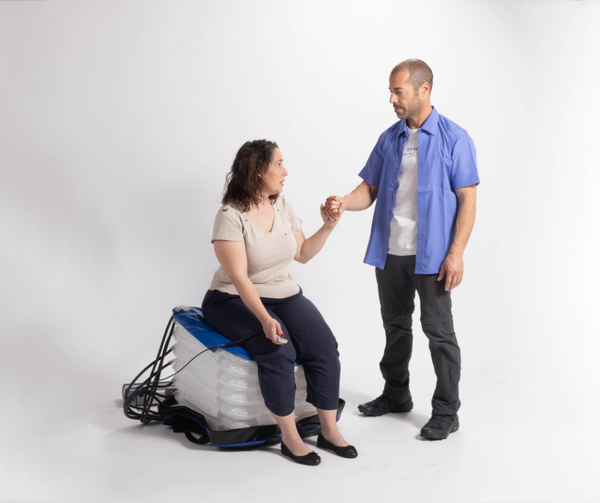
One staff member slides FloorRiser flat under the resident — even in tight bathrooms or hallways.
 2
2
Lift & Stand
Press up. The resident rises from floor to standing at their own pace — zero manual lifting from staff.
 3
3
Fold & Store
Deflate, fold, return to the carry bag. Wiped down in under 2 minutes, ready for the next call.
What's in the box
Everything ships ready to deploy.
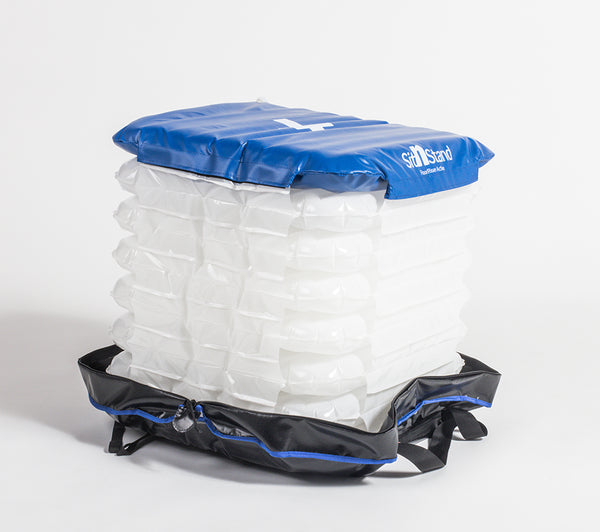
FloorRiser Active
Portable floor lift that raises a resident up to 29 inches — from floor level to standing.
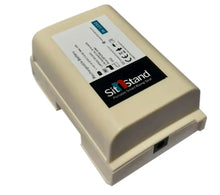
2× Battery Packs
Rechargeable Li-Ion — up to 4 lifts per charge. One charges while the other works.
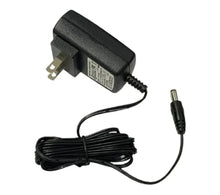
Universal Charger
100–240V wall adapter. Plus carry bag, user manual, and a 2-year warranty.
The numbers
The cost of inaction vs. one device.
At $2,199 with a payback under 3 months, the math on waiting doesn't work in your favor.
Fine estimates based on Decatur, IL implementation ($500/call) and CDC fall-rate benchmarks. Workers' comp and turnover from NIOSH and NSI 2025. Verify local ordinance status before projecting exposure.
For Directors of Nursing
Everything facilities need to know.
What exactly does HB 2336 require of Illinois facilities?
Illinois Public Act 104-0057, effective January 1, 2026, allows municipalities and fire departments to bill licensed care facilities for non-emergency EMS lift-assist calls that exceed 6 per calendar year. The fee can be set up to the actual cost of the response — in Decatur, IL this has been set at $500 per call. Each municipality must pass a local ordinance to begin billing. Not all Illinois cities have done so yet. Verify your local status directly with your city or fire department.
How do I know if my city has adopted an HB 2336 ordinance?
Contact your local fire department or city clerk directly. As of June 2026, Decatur has implemented at $500 per call and Springfield is in active review. Most other Illinois municipalities are monitoring outcomes before moving forward. The law is enabling — your facility has no fine exposure until your municipality passes a local ordinance.
How does FloorRiser Active reduce our HB 2336 fine exposure?
HB 2336 fines apply specifically to calls where EMS is dispatched for a non-emergency lift-assist. FloorRiser Active enables one staff member to handle a floor-to-stand assist without calling EMS — eliminating the billable call entirely. How much it reduces your call volume depends on your current ratio of emergency vs. non-emergency incidents.
Does FloorRiser Active guarantee we stay below 6 EMS calls per year?
FloorRiser Active handles non-emergency floor-to-stand situations — residents found on the floor who are alert, uninjured, and do not require medical attention. It does not replace EMS for emergencies where a resident is injured, unresponsive, or requires medical evaluation. Your actual reduction in billable calls depends on the proportion of your calls that are non-emergency lifts.
How does FloorRiser Active reduce staff injuries?
Manual lifting is responsible for 60% of back injuries among nurses. FloorRiser Active eliminates the manual lift entirely — the device does the lifting while the staff member operates a two-button remote. No two-person assist required. No physical strain on the operator. The staff member positions the device and guides the resident; the inflation system does the work.
Our facility already trains staff on body mechanics. Why isn't that enough?
Research consistently shows that body mechanics training does not reduce manual lift injury rates. The biomechanical stress of lifting a person off the floor exceeds safe limits regardless of technique. NIOSH sets 35 lbs as the maximum safe single-person lift — most residents weigh significantly more. Correct technique still places dangerous loads on the spine. Only removing the lift itself removes the injury risk.
How does it perform on night shift with limited staff?
Night shift is exactly where FloorRiser Active has the most impact. Most falls occur at night, and staffing is thinnest. FloorRiser Active allows a single nurse to handle a floor-to-stand assist safely without calling for backup, without waking a second aide, and without waiting for EMS. One person, under 60 seconds, no second pair of hands required.
Can it be used in tight spaces — bathrooms, hallways?
Yes. When deflated, FloorRiser Active is 29 × 29 × 0.4 inches — it slides flat under a resident on the floor. When inflated it expands to 29 × 29 × 29 inches. It works in most standard bathroom layouts, hallways, and bedrooms. The flexible inflatable cushion adapts to the available space around the resident.
What is the weight capacity?
600 lbs (272 kg), making it suitable for bariatric residents who typically require two-person manual assists. This is among the highest weight capacities available in portable floor-lift devices.
How many uses per battery charge?
Up to 4 lifts per charge. The battery retains charge for up to 6 months when disconnected. Each unit ships with 2 rechargeable Li-Ion battery packs so one can charge while the other is in use.
How long does setup take?
Under 60 seconds from unfolding to positioned and ready. The device unfolds from a 17 lb carry bag, slides flat under the resident, and is controlled via a two-button remote (up/down). No assembly, no tools, no installation.
How is it different from a Hoyer lift or ceiling lift?
Ceiling lifts and Hoyer lifts require installation, room-specific hardware, and typically a two-person operation. FloorRiser Active requires no installation, no dedicated space, and no second person. It weighs 17 lbs, moves between rooms in a carry bag, and is specifically designed for floor-to-standing transfers — the scenario that generates the most EMS calls and the most staff injuries.
How quickly can staff learn to use it?
Most facilities report staff confident and using it within days of delivery. The device has two controls: up and down. Any staff member who can operate a call button can use FloorRiser Active without formal training or certification.
Do we need to update our fall response protocol?
Adding FloorRiser Active to your protocol is straightforward. It becomes the first response for non-emergency floor incidents — before EMS is called. Your clinical team determines the exact protocol language. The standard approach: if the resident is alert, oriented, and uninjured, deploy FloorRiser Active. If the resident is injured or requires assessment, follow your existing EMS protocol as before.
Is FloorRiser Active consistent with CMS safe patient handling guidance?
Yes. FloorRiser Active eliminates manual floor lifting, which directly addresses NIOSH safe patient handling guidelines (maximum 35 lb single-person lift). Using a mechanical lift device for floor-to-stand transfers is consistent with CMS safe patient handling guidance and reduces the documentation risk associated with unassisted manual lifts on survey review.
How many units does a facility typically need?
Most facilities start with 1–2 units. Facilities with multiple floors or high call volumes typically order one unit per floor or wing. The device is portable enough to share between units, but response time improves with a dedicated unit per wing.
Is a demo unit available before we commit?
Yes. Contact us to arrange a demo unit for your facility. This allows your DON and clinical staff to evaluate FloorRiser Active on your floor, with your residents, before placing an order. Reply to any email from our team or call us directly to arrange.
Do you offer bulk or multi-facility pricing?
Yes. Volume pricing is available for multi-unit and multi-facility orders. Contact us directly for a quote — email or phone, both listed below.
What is the return policy for facility orders?
60-day satisfaction guarantee when purchased directly from sitnstand.com. Return the device in its original condition for a full refund. Each unit also carries a 2-year parts and components warranty.
What is included with each unit?
Each FloorRiser Active ships with: the device, carry bag, 2 rechargeable Li-Ion battery packs, universal wall charger (100–240V compatible), user manual, and a 2-year warranty.
What is the payback period?
At $2,199 and current HB 2336 fine rates ($500/call in Decatur), facilities with 7 or more EMS calls per year recover the device cost in under 3 months. If a single lift-related workers' comp claim is prevented, the device pays for itself approximately 14–23 times over. If a single nurse replacement is avoided, the device pays for itself approximately 28 times over.
How is FloorRiser Active categorized for facility budget purposes?
FloorRiser Active qualifies as durable medical equipment and is typically expensed as a capital or operational equipment purchase. Consult your facility's finance team for the appropriate budget categorization under your specific accounting policies.
Does it qualify for any insurance or grant programs?
Safe patient handling equipment may qualify under certain workers' compensation risk reduction programs. Some carriers offer equipment incentives for documented injury-prevention tools — check with your workers' comp insurer. OSHA compliance grants may also apply depending on your state. Consult your insurance carrier and your facility's risk management team for specifics.
Can the purchase be justified to administration without a trial period?
Yes. The budget case is straightforward: the device costs less than one workers' comp claim, less than one month of HB 2336 fines at an average facility, and less than 4% of the cost of replacing one injured nurse. Our Business Case one-pager walks through the full cost-of-inaction analysis — ask us to send it and bring it to your next budget conversation.
Put it on your floor
before you commit.
Arrange a demo unit so your DON and clinical staff can evaluate FloorRiser Active with your residents — risk-free, with a 60-day satisfaction guarantee.